
Breaking the PoC Barrier: Why Global SaaS Stalls in Japan and How to Scale
In this article, we dive into the operational realities of Digital Transformation (DX) across Japan’s traditional enterprises—in sectors like manufacturing, construction, logistics, and finance. We explore the system integration and security strategies global startups need to break through the “Proof of Concept (PoC) trap” and win full-scale deployment.
The “12 Trillion Yen Cliff” and the Demand for External Solutions
According to a warning from the Ministry of Economy, Trade and Industry (METI), failure to overcome legacy IT systems could cost Japanese enterprises up to 12 trillion JPY per year in economic losses.
Driven by this sense of crisis, major corporations in Japan—historically obsessed with custom-built, in-house software—are rapidly turning to cutting-edge foreign SaaS, AI, and IoT solutions.
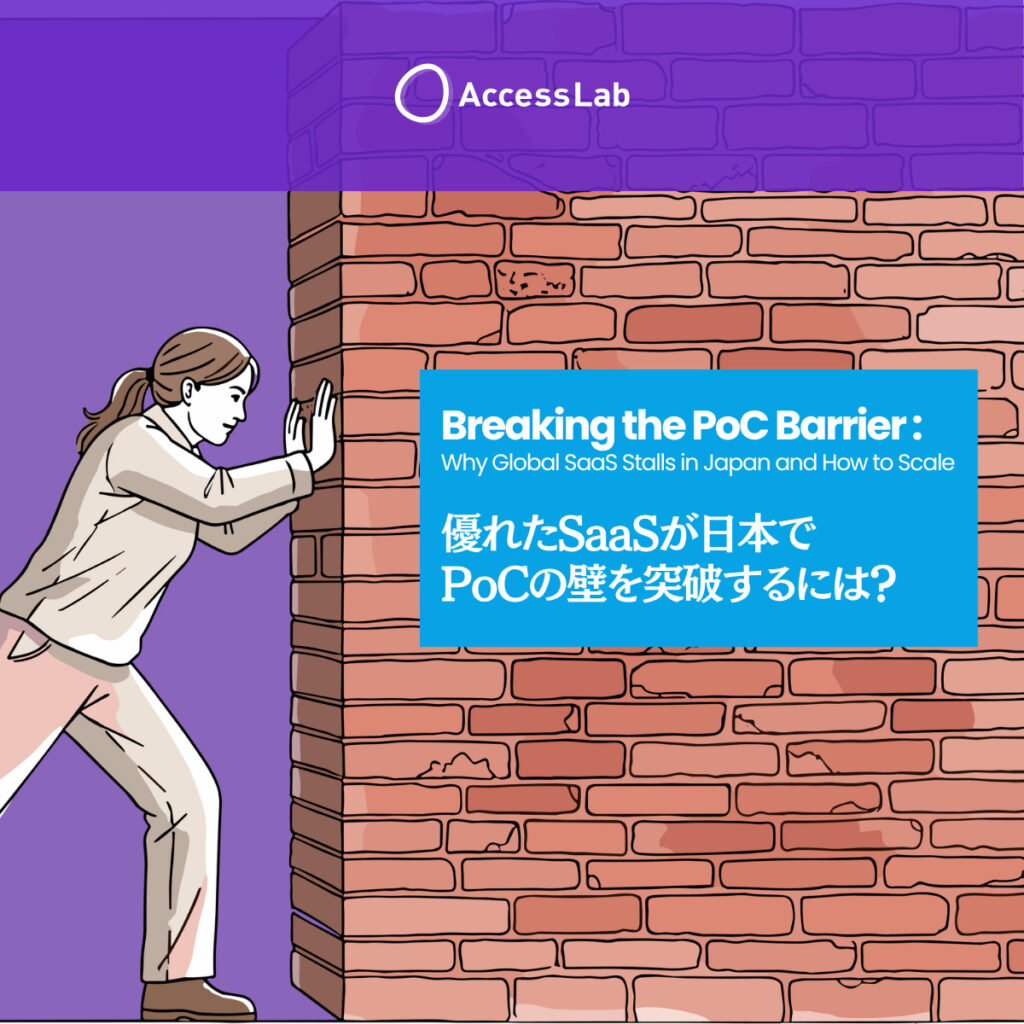
However, many global startups encounter a frustrating barrier: a successful PoC that fails to convert into a full commercial deployment. This is the “PoC Wall.”
Real-World Case Studies: 3 Inconvenient Truths Behind Stalled PoCs
Why do products with proven global track records get rejected at the deployment stage in Japan? Failures typically stem from three specific pitfalls:
Security Compliance Failures
Field Reality: Even if your solution holds global SOC 2 or ISO certifications, Japanese enterprises often enforce strict local requirements, such as refusing data transfers outside their private network, requiring specific onshore data centers, or demanding compliance with legacy on-premises security policies.
Missing APIs in Legacy Systems (Mainframes & On-Premise)
Field Reality: Core business data is frequently locked inside decades-old legacy systems or on-premises infrastructure without standard REST APIs or Webhooks, making direct integration impossible out of the box.
Shadow IT Concerns and Frontline Resistance
Field Reality: Rolling out software with an English-only or poorly translated UI often leads to rejection by frontline operational staff (Genba). When users struggle with adoption, teams revert to familiar manual workflows using Excel and paper.
Technical & Strategic Architecture for Full-Scale Deployment
Winning the budget for a full-scale deployment requires more than a compelling product value proposition. You must present a technical roadmap that satisfies all key decision-makers: executives, IT departments, and frontline users.
Offer Phased Hybrid Connectivity:
Instead of forcing an immediate replacement of legacy core systems, propose a phased integration architecture using middleware or custom Web APIs to bridge modern SaaS with legacy databases.
Align with Japanese Security Standards:
Prepare detailed security architecture diagrams tailored to local regulations, including Japan’s Act on the Protection of Personal Information (APPI) and industry-specific security questionnaires (which often span hundreds of items).
Design for IT Governance:
Win over corporate IT teams by embedding governance features into your technical proposal from day one—such as SSO (Single Sign-On), granular permission controls, IP whitelisting, and audit logging.
Closing: How Access Lab Supports Your Growth in Japan
Entering the Japanese enterprise market presents significant hurdles, but once full deployment is achieved, churn rates are remarkably low, offering exceptional Lifetime Value (LTV).
At Access Lab, our Tokyo-based team of bilingual IT engineers bridges technical and regulatory gaps to help global products navigate local integration, pass security reviews, and transition seamlessly from PoC to production.
Need technical support for system integration, security alignment, or enterprise onboarding in Japan? Reach out to us today:
🌐 Official Website:accesslab.co.jp
📺 YouTube Channel:@re-skilling