
Beyond the Heatwave: Japan’s “Climate Migration”
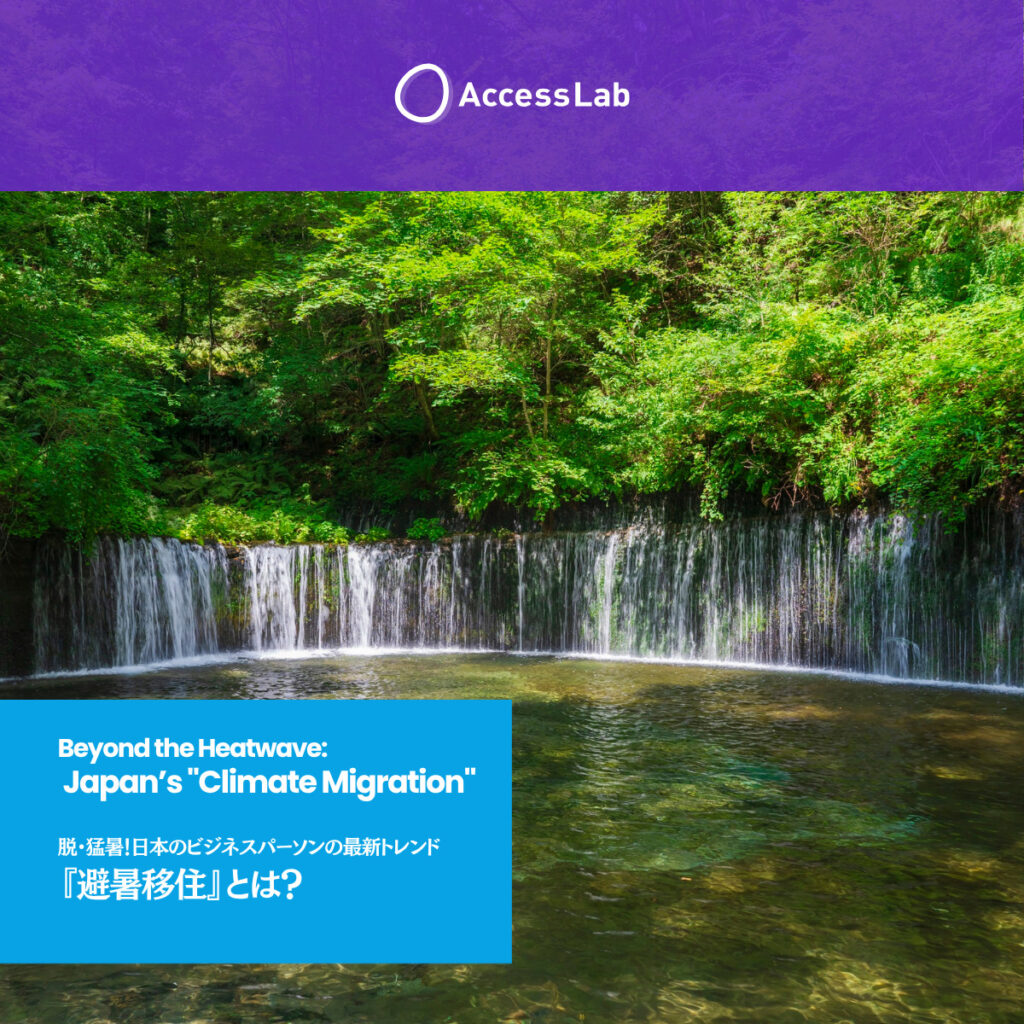
Extreme heatwaves swept across Europe this year, driving global concern over climate risk to an all-time high. In Japan, rising temperatures are no longer an occasional anomaly—they are actively reshaping business, lifestyle habits, and daily living.
Historically, the standard response to a Japanese summer was a short stay at a mountain cottage. Today, however, professionals are making a structural pivot toward “Climate Migration” (Hisho Iju)—relocating their primary residence or establishing a dual-base setup in search of cooler weather and reliable living infrastructure.
In this issue of Japan Insight, we explore how Japan’s traditional summer retreats are evolving, highlighting specific movement in Karuizawa, Katsuura, Zushi, and Kushiro, and examining what this shift means for operations in a distributed work era.
Top Destinations Driving Japan’s Climate Migration
Karuizawa, Miyota & Saku, Nagano (Highland Resort & Suburban Hub)
・Karuizawa
Located just 60 minutes from Tokyo Station via the Hokuriku Shinkansen, Karuizawa boasts high-speed fiber infrastructure and world-class educational institutions like ISAK (UWC ISAK Japan). Once considered a seasonal getaway, it has transformed into a year-round hybrid living hub for families in their 30s and 40s and remote professionals.
・Miyota & Saku
As property prices in Karuizawa hit record highs within Nagano Prefecture, demand has spilled over into neighboring Miyota and Saku. Offering accessible land prices at one-third to one-fifth of Karuizawa’s cost while remaining within driving distance, these towns form an interconnected, regional living network.
Katsuura, Chiba (Coastal Oceanic Zone)
Katsuura is famous as one of the few areas near Tokyo that has never recorded an “extremely hot day” (35°C / 95°F or higher) since weather tracking began in 1906. An underwater trench offshore causes an upwelling of deep, cold ocean water, which cools incoming sea breezes to act as a natural air conditioner. Located about 90 minutes from Tokyo via express train, Katsuura has seen relocation inquiries nearly double. This surge is fueled by generous local government support, including free childcare and school lunches for infants and toddlers.
Zushi & Manazuru, Kanagawa (Greater Tokyo Coastal Zone)
・Zushi
Positioned roughly 60 minutes from Tokyo and Shinjuku via direct origin trains on the JR Yokosuka and Shonan-Shinjuku lines, Zushi offers unbeatable commuting convenience. Its coastal geometry prevents heat retention, and its generous family policies—such as free medical care for minors up to age 18—make it a top pick for working parents.
・Manazuru
Blessed with fresh sea breezes flowing through the Manazuru Peninsula, this town stays noticeably milder than urban centers. Local zoning ordinances (known as the “Standards of Beauty”) restrict overdevelopment, preserving a quiet, high-quality residential environment.
Kushiro, Hokkaido (Northern Oceanic Zone)
Kushiro boasts a “natural cooler climate” where peak summer temperatures in July and August rarely exceed 30°C (86°F). Known for its total lack of Japanese cedar and cypress pollen, it has gained immense popularity for long-term seasonal stays and dual-base living.
💡Column: Escaping More Than the Heat—The Rise of “Pollen Migration”
Summer heat isn’t the only trigger driving professionals to relocate. In recent years, “Pollen Migration” (Kafun Escape) has emerged as a major lifestyle strategy to avoid severe spring allergy seasons.
For professionals suffering from severe hay fever (kafunsho), spring pollen drastically degrades daily productivity and well-being. To mitigate this, many are tapping into regional environmental advantages through short-term relocation or dual-base workations.
・Kushiro, Hokkaido
Eastern Hokkaido lacks the massive cedar and cypress plantations found across mainland Japan. Remote workers frequently spend 1 to 2 months here during peak spring to maintain their health and work performance.
・Okinawa & Outer Islands
Because Japanese cedar trees do not grow naturally or commercially in Okinawa, these islands serve as the ultimate refuge for allergy sufferers. Spending spring working remotely from Okinawa has become a practical approach to health management.
Insight: Process Visualization in a Distributed Work Era
As dual-base living, regional relocation, and hybrid arrangements become mainstream, companies face a growing operational risk: organizational fragmentation and black-box processes.
When team members are spread across different locations and time zones, establishing real-time transparency—knowing who is doing what and tracking project status—is critical to removing bottlenecks. Building a resilient, process-driven organization requires a shift from informal communication to structured, scalable systems.
Closing
At Access Lab, we help organizations adapt to modern, flexible workstyles by implementing monday.com, a powerful work platform that visualizes complex business workflows and streamlines cross-functional collaboration.
Need support visualizing workflows, optimizing processes, or implementing monday.com? Reach out to our team below:
🌐 Official Website:accesslab.co.jp
📺 YouTube Channel:@re-skilling